A unified authentication solution that allows for omnichannel auth, passwordless login and/or a seamless second factor. Authenticate users with minimal friction. Prove uses strong binding to initially register a Prove Key on the device, after which that key can be used either in-app or from secondary channels (ie. Desktop, Call Center, or Retail).
As the user logs in, Prove verifies the device is the same as was registered at first app login. The first time a phone is seen use PRO to complete registration
The user is logged in without the need for entering a password
User is attempting a high-risk transaction on a desktop or other secondary device.
If enabled, offer a Push option to the user.
Prove authenticates the user through their mobile device.
The customer confirms that they approve the transaction. Prove verifies the device if previously registered or if required verifies the phone number with the mobile network operator (MNO) with Trust Score and authenticates the customer's identity in the background using behavioral biometrics
Use the FIDO-registered biometric from the device to authenticate.
Use the FIDO-registered biometric from the device to authenticate.
The transaction is allowed to proceed if the proper person is authenticated
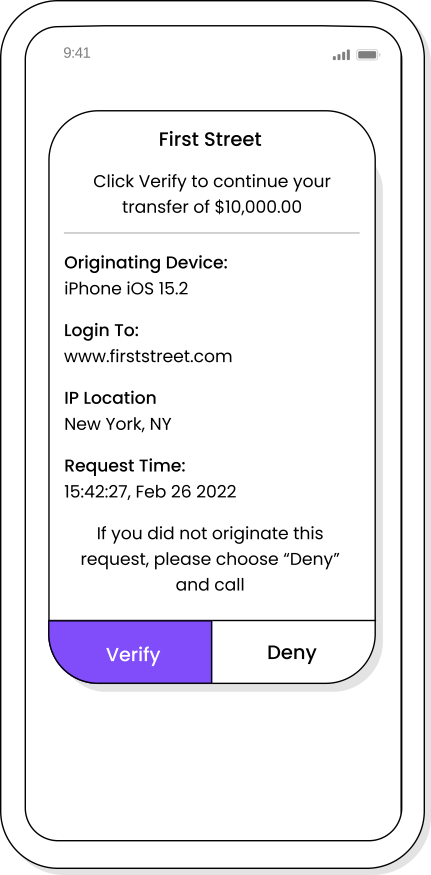
The customer wants to perform an Extreme Risk Transaction (ERT), such as transferring a large sum of money to a third party.
The customer is offered a selection of additional authentication options and selects Push Authentication.
Prove verifies the user’s identity leveraging mobile device information
The customer confirms that they approve the transaction. Prove verifies the device and authenticates the customer's identity in the background using motion-based behavioral biometrics
Optional: Use the on-device biometric to authenticate further.
Optional: Use the on-device biometric to authenticate further.
The transaction is allowed to proceed if the proper person is authenticated
As the user approaches the door, a sensor detects the presence of the mobile device (via bluetooth or NFC). The motion data of the user is then evaluated against the model.
If the user’s motion matches the model then access is granted.
.svg)


%20Desktop%205.svg)




.svg)


.svg)
.svg)
.svg)
.svg)